A Hidden Symphony: Unveiling Life’s Quiet Wonders
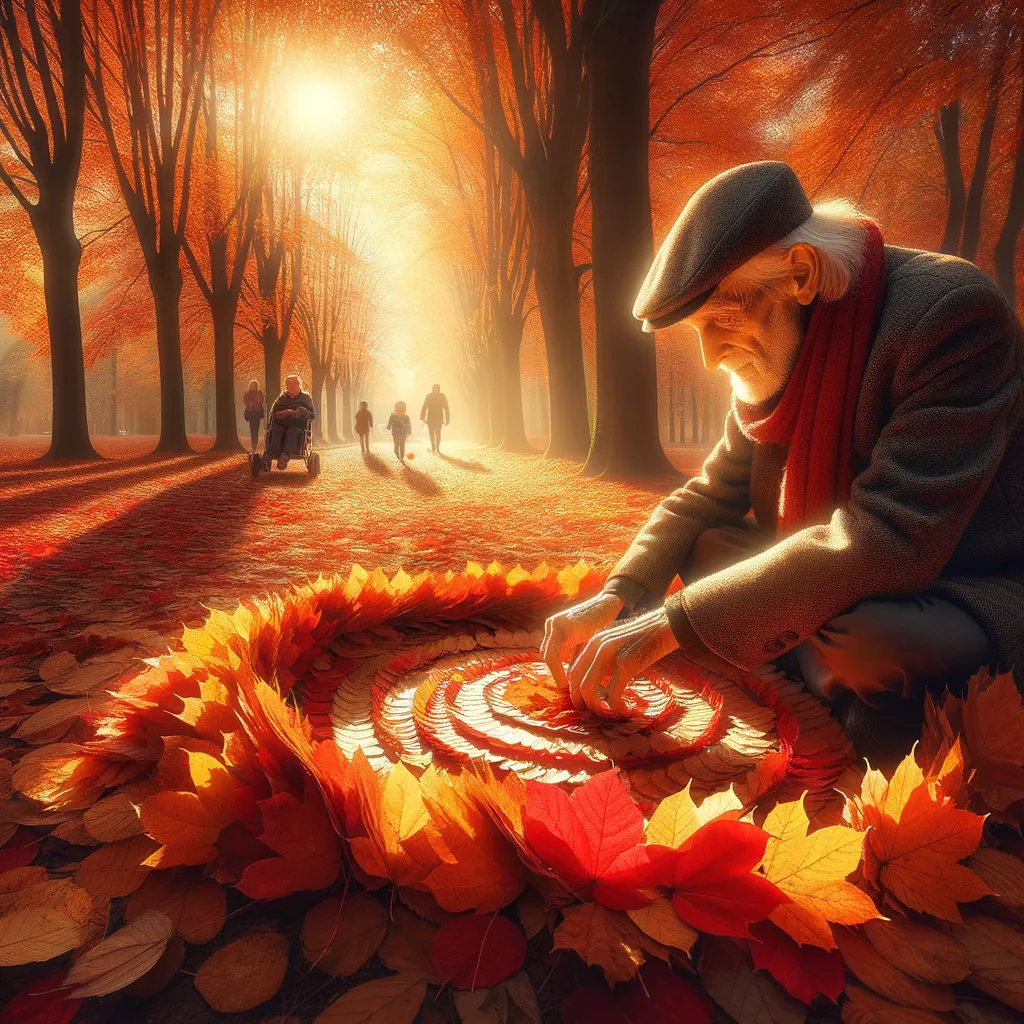
Amidst the vibrant hues of autumn, a familiar hometown transformed into a realm of discovery, where a simple stroll unveiled profound revelations. In a secluded park, an elderly man meticulously arranged fallen leaves, each placement a silent tribute to nature’s cycles and the beauty of change. What appeared at first to be an inconsequential act blossomed into a poignant reminder of life’s transience, as the colorful tapestry he created whispered stories of letting go. In a fleeting moment of connection, a shared understanding sparked, revealing the extraordinary hidden in everyday life, urging a deeper appreciation for the overlooked. This encounter lingered long after, igniting a newfound awareness of the small wonders that weave the fabric of existence, beckoning a reflection on the subtle gestures that shape personal journeys.
In the memory of October 6, 2020, I found myself wandering through the streets of my hometown, a place both familiar and foreign in the crisp air of autumn. The leaves were just beginning to change, their vibrant hues whispering secrets of transformation. As I strolled, my mind flitted between the mundane and the profound, a dance of thoughts that seemed to mirror the shifting colors of the season. It was on this day that I stumbled upon a moment that would resonate deeply, a gesture so subtle yet overflowing with meaning that it felt like a secret shared only between me and the universe.
I paused at a small park, a hidden gem that had often gone unnoticed in my hurried life. The benches, weathered and inviting, called to me, and I took a seat beneath a sprawling oak tree. Its branches stretched out like welcoming arms, cradling the sky above. There, in that serene space, I noticed an elderly man meticulously arranging fallen leaves into a delicate pattern on the ground. The world around him buzzed with life, yet he was enveloped in a bubble of quiet concentration, each leaf a note in his silent symphony.
At first glance, this man appeared to be merely passing time, engaging in a trivial activity. Yet, as I observed, I felt a sense of urgency rising within me. This was not mere whimsy; it was an act of reverence. With each leaf he placed, he seemed to be conversing with nature, crafting a tapestry that celebrated the very essence of change. I began to imagine the stories each leaf held—the summer sun that nurtured it, the winds that carried it to the ground, and the inevitable cycle of life that brought it to this moment of stillness.
The leaves transformed under his hands, a kaleidoscope of colors that danced in the afternoon light. I felt a tug at my heartstrings, an unspoken understanding that this gesture was not just about aesthetics. It was a reminder of the beauty in transience, a silent protest against the chaos that often drowned out life’s subtleties. I marveled at how something so simple could encapsulate so much, and it struck me that few around him paused to notice. The world rushed by, oblivious to the poetry unfolding at their feet.
As I sat there, the man glanced up briefly, his eyes twinkling with an unshared secret. In that fleeting moment, it was as if he recognized me—not as a passerby, but as a fellow traveler on this journey of existence. He continued his task, and I felt an inexplicable kinship with him, a thread connecting our souls in a world often dominated by noise and haste. It was as if he was daring me to see the extraordinary in the ordinary, to find grace in the overlooked corners of life.
Time slipped away, and I found myself lost in contemplation. The leaves, once mere remnants of summer, now symbolized the beauty of letting go. I thought of my own life, the things I clung to, the moments I feared to release. This man’s simple act of creation stirred something profound within me, a call to embrace change rather than resist it. There was a lesson in his labor, a reminder that even in our most solitary moments, we are all part of a larger narrative.
As the sun dipped below the horizon, casting a golden hue over the park, the man finally stepped back to admire his work. The pattern of leaves, now complete, was a fleeting masterpiece destined to be scattered by the winds. It was a poignant reflection of life itself—beautiful yet ephemeral, crafted with intention but ultimately surrendered to the world. I felt a swell of emotion, a mix of gratitude and melancholy, as I realized that he had given me a gift that day: the ability to see beyond the surface.
When I finally stood to leave, I turned back one last time, hoping to capture the moment in my mind forever. The park was emptying, and the man was already beginning to gather his things, the leaves destined to be swept away by the evening breeze. I felt an ache of loss, a recognition that such moments are fleeting, easily overshadowed by the relentless pace of life. Yet, the imprint of his gesture lingered, a gentle nudge toward mindfulness.
In the weeks that followed, I carried that moment with me, allowing it to seep into my daily existence. I began to notice the small things—the way the light filtered through the trees, the laughter of children playing, the kindness of a stranger. The world felt richer, layered with stories waiting to be uncovered. It became clear that the most profound truths often lie hidden beneath the surface, waiting for someone to take a moment to uncover them.
As I reflect on that October day, I am left with a question that continues to resonate: In a world that often overlooks the extraordinary within the ordinary, how many subtle gestures might we be missing, and what might they reveal about our own journeys?
Amidst the chaos of life, the simplest gestures hold the power to unveil the extraordinary, inviting a deeper connection with the world and the stories woven within it.