Unveiling Life’s Truths: A Prank’s Unexpected Journey
At the crossroads of mirth and seriousness, a vibrant sunlit morning unveiled the absurdity and beauty of life in a small town, setting the stage for a day that would be forever etched in memory. Whispers of pranks filled the air, leading to the infamous “ranch dressing incident,” where a local prankster transformed the town’s fountain into a creamy cascade, sparking laughter that momentarily lifted the weight of unspoken discontent. As townsfolk gathered, their joyous laughter mingled with the surreal scene, revealing how humor could unite them amidst hidden struggles. Yet, beneath the surface of this playful chaos lay a deeper truth, as laughter mirrored their vulnerabilities and illuminated the complexities of their existence. In the twilight of that remarkable day, a newfound sense of creativity stirred within, igniting a desire to engage with life’s intricate dance, reminding all that sometimes the most profound discoveries emerge from embracing the absurd.
In the memory of April 1, 2004, I find myself standing at the crossroads of mirth and seriousness, a day that felt like a veil had been lifted, revealing both the absurdity and beauty of life. The sun rose with an unusual vibrancy that morning, casting a golden hue over everything it touched. It was a day meant for levity, yet beneath the surface lay currents of tension that had gripped the small town I called home. The air was thick with anticipation, as if the universe had conspired to create a moment of catharsis through laughter.
As I navigated the streets, whispers of pranks danced on the wind, an invisible thread weaving through the community. The local diner, a hub of gossip and camaraderie, served as the epicenter of this day’s unfolding drama. The regulars, faces etched with stories and laughter lines, exchanged knowing glances. It was there that I first heard of the infamous “ranch dressing incident,” a prank that would soon ripple through our quiet lives. A local prankster had filled the town’s fountain with ranch dressing, transforming the once-clear water into a creamy cascade. The visual was absurd, a surrealist painting come to life, and it had the power to dissolve the heaviness that had lingered for too long.
I remember the moment vividly: a gathering of townsfolk at the fountain, their laughter mingling with the sound of water splashing in a bizarre celebration of culinary chaos. Children danced around the fountain, their giggles punctuated by exaggerated expressions of horror and delight. Adults, too, found themselves caught in the infectious spirit of the day, their worries momentarily suspended. The ranch dressing, a symbol of mischief, united us in a collective absurdity, reminding us of the joy found in shared laughter.
Yet, as the sun arched higher, casting shadows that grew longer, the prank began to unearth deeper truths. Laughter, once a balm, revealed the fractures beneath our jovial facade. Conversations turned from playful banter to whispers of discontent, highlighting the undercurrents of disillusionment that often lingered unspoken. The ranch dressing had served its purpose, but it also illuminated the struggles that had become commonplace in our lives, blurring the lines between humor and sorrow.
In that moment of realization, I understood the profound role of humor in our existence. It acted as both a shield and a mirror, reflecting our vulnerabilities even as it offered solace. The prank had not just been a moment of absurdity; it was a catalyst for connection, a reminder that even amidst chaos, we could find common ground. It was a fleeting glimpse into the complexities of our lives, where laughter and tears often danced hand in hand.
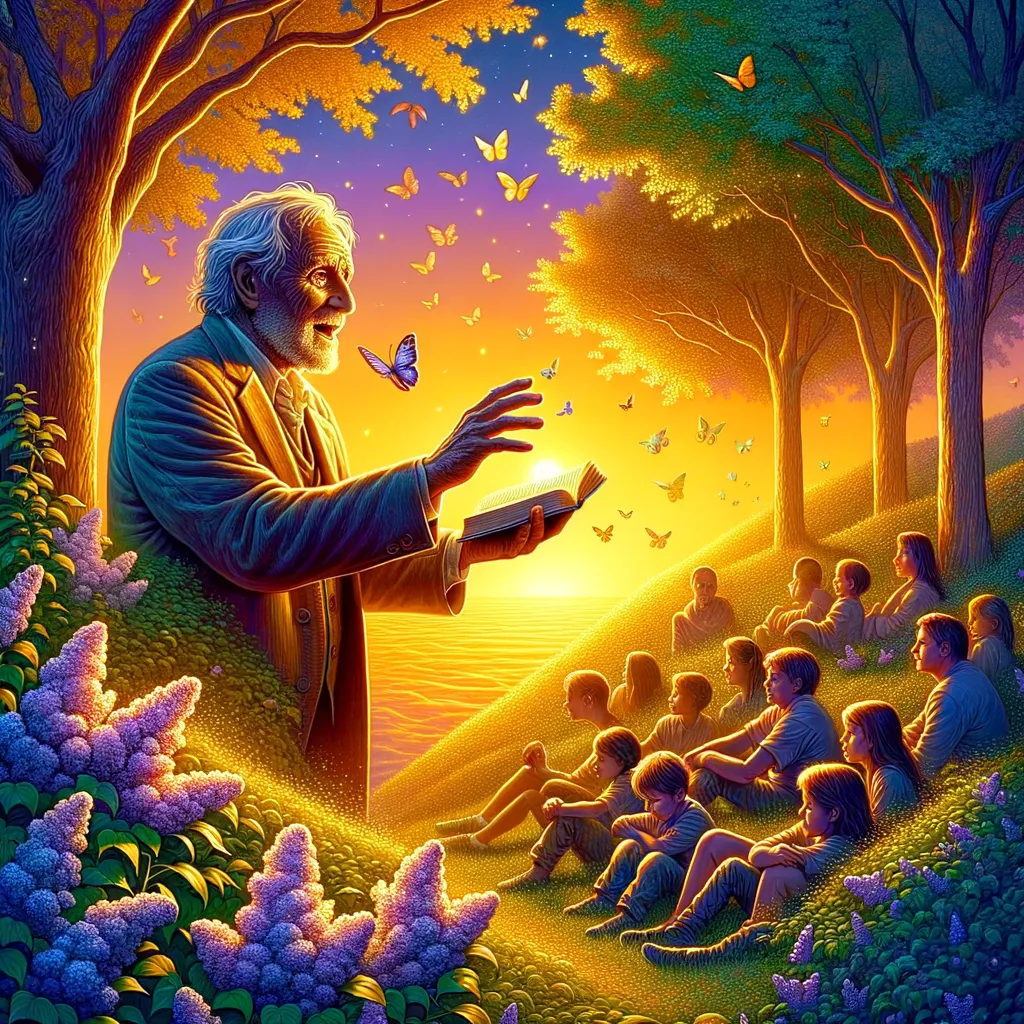
As the day wore on, the laughter at the fountain faded, giving way to an unexpected moment of silence. The sun began its descent, casting a warm glow that seemed to wrap around us like a comforting embrace. It was a reminder that, while we could find joy in the simplest of moments, life remained a tapestry woven with both light and shadow. In that quiet reflection, I felt a kinship with my neighbors, a collective understanding that we were all navigating our own storms, sometimes seeking refuge in laughter and other times in silence.
In the heart of that day, I also discovered something unexpected within myself. The prank had awakened a sense of creativity, a desire to engage with the world not just as a passive observer but as a participant in its unfolding drama. The realization that joy could emerge from chaos ignited a spark, compelling me to explore the depths of human experience through art and expression. It was a revelation that reshaped my understanding of life’s intricate dance.
As twilight descended, casting a soft glow over the remnants of the day, I wandered away from the fountain, my heart lighter yet full of questions. The laughter may have faded, but its echoes lingered, intertwining with my thoughts. In that moment, I recognized the duality of existence: the joy intertwined with sorrow, the absurd juxtaposed against the serious. Life was a series of pranks and revelations, a journey where the unexpected often led to the most profound discoveries.
Looking back, I realize that April 1, 2004, was more than just a day marked by a prank; it was a reminder that humor could bridge the gaps between us, that laughter could light the way through our darkest hours. It taught me that sometimes, the most beautiful moments arise from the chaos of life, revealing truths we might otherwise overlook. As I reflect on that day, I am left with a lingering question: In what ways can we embrace the absurd to find deeper connections in our own lives?
Laughter, woven through the fabric of absurdity and sorrow, becomes a bridge that connects souls, illuminating the hidden truths of our shared existence.