Colors of Joy: Unveiling the Heart of Holi’s Magic
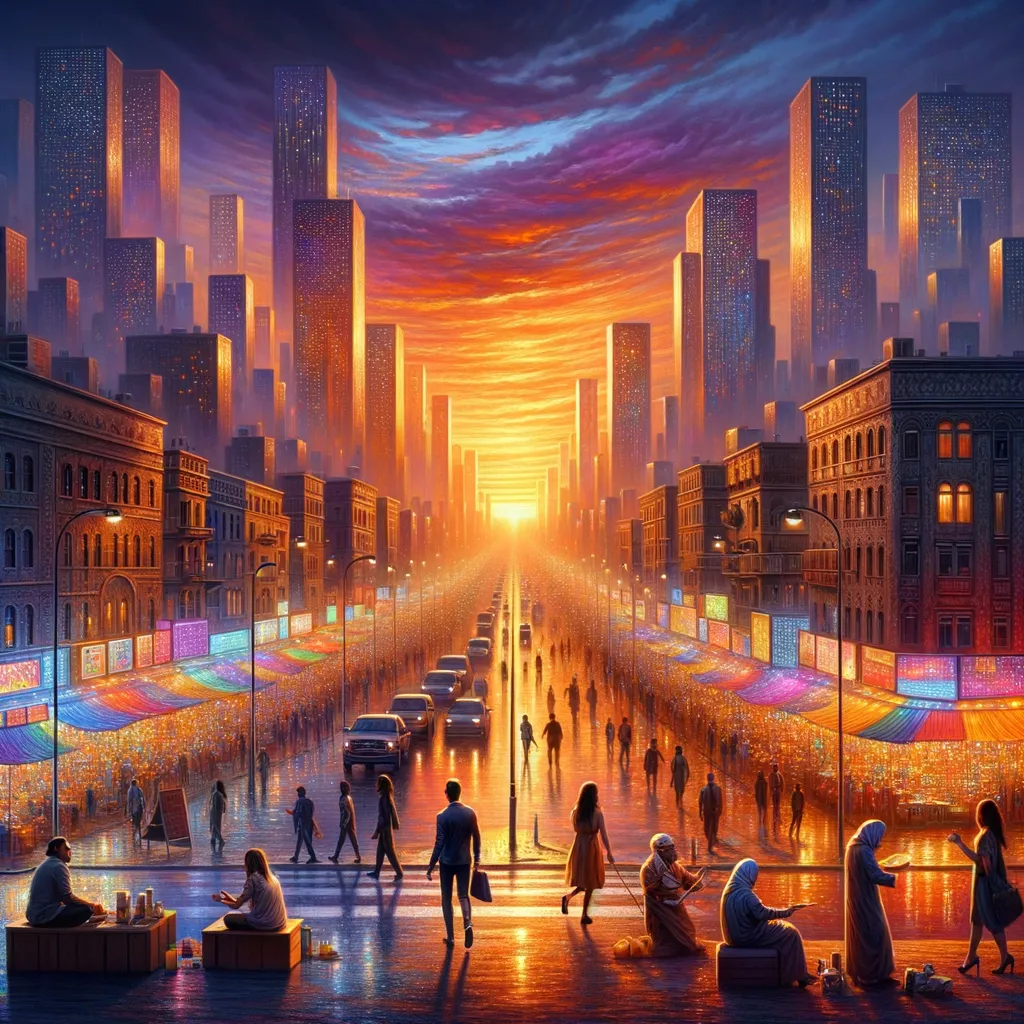
At a vibrant crossroads of imagination, the essence of the Holi festival in India unfolded like a vivid dream, where the air shimmered with spices and laughter, beckoning to be explored. Colors erupted in joyous splashes, transforming the mundane into a dazzling spectacle, revealing deeper truths about joy, community, and the human experience. As children dashed through the throngs, their laughter became a melody of innocence, inviting everyone to shed their burdens and embrace connection, transcending barriers that often divide. Each colorful explosion served as a reminder of the beauty found in diversity, urging an awakening to the richness of shared experiences and the potential for understanding. In this imagined celebration, the fleeting nature of joy illuminated the path toward empathy, leaving behind a lingering question about how often the vibrant colors of life are truly embraced.
In the memory of July 25, 2012, I stood at the crossroads of my imagination, pondering a cultural event that had long danced tantalizingly at the edges of my consciousness. The scent of spices hung in the air, mingling with the laughter of children and the rhythmic beat of drums, drawing me into a vibrant tapestry woven with threads of history and hope. I imagined myself in the midst of the Holi festival in India, where colors explode like fireworks in a night sky, transforming the mundane into something extraordinary. Each splash of color, each joyous shout, promised a kind of epiphany—a revelation that might alter the very fabric of my understanding of joy, community, and the human experience.
As I visualized the scene, I could almost feel the warmth of the sun against my skin, the energy of the crowd pulsing around me. The vibrant hues of powder danced in the air, swirling like a dream. Here, in this explosion of color, I envisioned a freedom that transcended the constraints of everyday life. In that moment, I could see how the act of throwing color was not merely a celebration but a metaphor for shedding the weight of sorrow, prejudice, and division. Each color represented not only joy but also the myriad emotions that shape our human experience, a kaleidoscope of life itself.
The laughter of children echoed in my ears, weaving through the chaos like a golden thread. I imagined them darting between adults, faces smeared with vivid pigments, their giggles a melody that harmonized with the pulsating beat of the drums. In their uninhibited revelry, I saw a reflection of innocence, a reminder of the untainted joy that resides within each of us, waiting to be unleashed. The adults, too, immersed in the experience, became children once more, their faces alight with the thrill of connection, of shared humanity, of breaking down barriers that too often divide us.
Yet, amidst this sea of color and laughter, I felt an undercurrent of something deeper. This celebration of Holi, rich with tradition, was also a call to embrace diversity. Each splash of color was a reminder of the uniqueness that each individual brings to the collective experience. I pondered how witnessing such an event might reshape my own perceptions, teaching me the value of embracing differences rather than shying away from them. It was as if the festival whispered a truth: in unity, there is strength, and in diversity, there is beauty.
As the day wore on in my imagination, I could almost taste the sweets that accompanied the festivities, their sugary richness contrasting with the tang of the colors. The shared meals, the laughter over cups of chai, became symbols of connection, an invitation to partake in the lives of others. It struck me that these simple acts of sharing could bridge gaps that seemed insurmountable. In this imagined reality, I found myself pondering how often I had allowed preconceived notions to cloud my perception of others, to build walls instead of bridges.
The sun dipped lower in the sky, casting a golden hue over the festivities, and I felt a shift within me. This imagined experience began to unravel layers of my own understanding of happiness. I saw how easily I could become ensnared in the mundane, caught in a cycle of routine that dulled my senses. The colors of Holi were not merely visual; they were a reminder to seek out the extraordinary in the ordinary, to infuse life with vibrancy and spontaneity.
As twilight approached, the laughter grew softer, the colors began to settle, but the spirit of the festival lingered. It was a lesson in resilience, the reminder that even after the colors fade, the joy remains, embedded in memory and heart. I thought about how this experience could teach me to embrace the ephemeral beauty of life, to understand that moments are fleeting yet profound. Each encounter, each celebration, carries the potential to transform, to enlighten, to deepen our collective narrative.
Ultimately, I realized that this imagined journey was not merely about witnessing a festival but about an awakening—an invitation to see the world through a lens of empathy and understanding. It challenged me to step outside of my comfort zone, to embrace the unfamiliar, and to welcome the unexpected. The colors of Holi became a symbol of my desire to live more fully, to engage with the world around me with open arms and an open heart.
In that moment of reflection, I understood that the beauty of experiencing a cultural event firsthand lies not just in the sights and sounds but in the profound connections it fosters within us and among us. It is an exploration of identity, of belonging, and ultimately, of love. As I pondered this, a question lingered in the air like a whisper: how often do we allow ourselves to step into the vibrant colors of life, to truly celebrate our shared humanity?
In the kaleidoscope of life, each vibrant hue invites a celebration of diversity, urging the heart to embrace the extraordinary woven within the fabric of shared humanity.